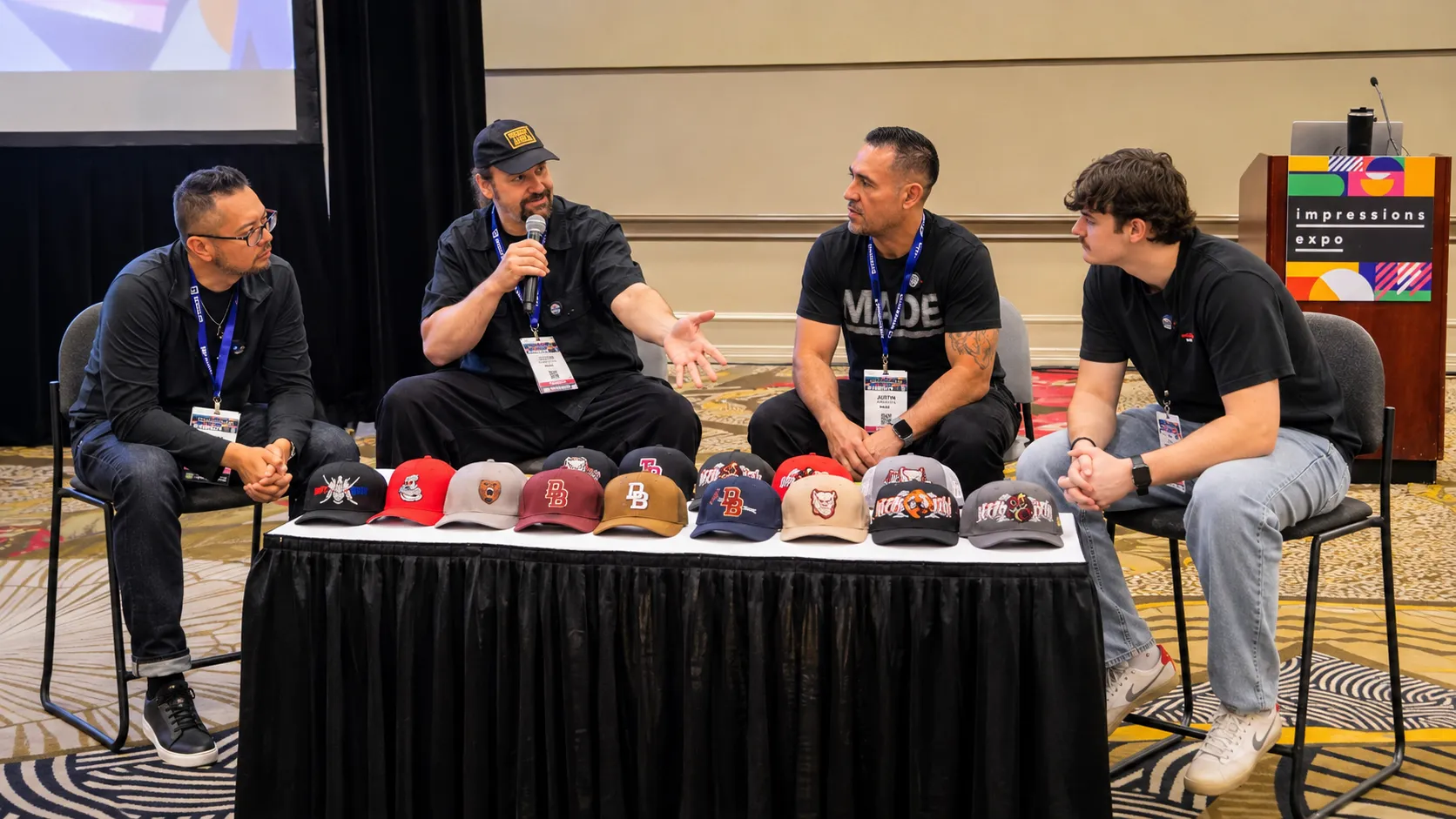
Hats and 3D puff embroidery generated plenty of questions during MADE’s live Q&A at Impressions Expo Dallas. Underlay peeking out, shifting cap panels, and messy foam cleanup can turn an appealing product into a frustrating run.
Part 3 of our Dallas Embroidery Q&A series combines the experience of Justin Armenta, Erich Campbell, Joe Kramar, and Alex Burton. The practical lesson is that the cap, file, foam, backing, and setup have to work together.
Which hat is best for embroidery
There was no universal panel favorite. Yupoong styles, Flexfit’s NU line, and a familiar structured cap such as a Richardson 112 are options to evaluate. Some five-panel constructions simplify front decoration by removing a central front seam; confirm the exact model.
Choose a cap that suits your customer’s fit preference, artwork, and equipment. Crown height, seam thickness, fabric, and design placement affect results. Keep tested samples and setup notes for the styles you regularly offer.
Does a structured cap still need backing
Start with suitable cap backing even when the front contains buckram. A cap tear-away around 2.5–3 ounces is a common option to test. It can stabilize the area and provide a smooth barrier between internal structures and the needle plate.
Support the area actually being decorated, including side panels when needed. Some proven combinations run well without added backing, but that should be a tested decision. The cap’s internal structure alone does not tell you how consistently the design will run.
Why is underlay showing beside satin stitches
Check whether the cap is moving before changing the file. Seat and secure it correctly, keep the sweatband clear, and inspect whether seam tape or another internal structure is catching on the needle plate.
Then review the digitizing. Underlay may need more inset from the satin edge, or the design may need adjusted compensation, stitch direction, or sequencing. Center-out and bottom-up planning often helps on caps, adapted to the artwork. Adding density without finding the cause can make production worse.
What foam should I use for 3D puff
Choose embroidery-specific foam that perforates cleanly and retains the intended shape. Generic craft foam may create more cleanup and less predictable edges. Products with identical thicknesses can have different firmness and recovery.
Match the foam color to the thread where possible. Use a file built for puff, with suitable column widths, coverage, sequence, and closed or capped ends. A flat embroidery file does not automatically become a puff design when foam is added.
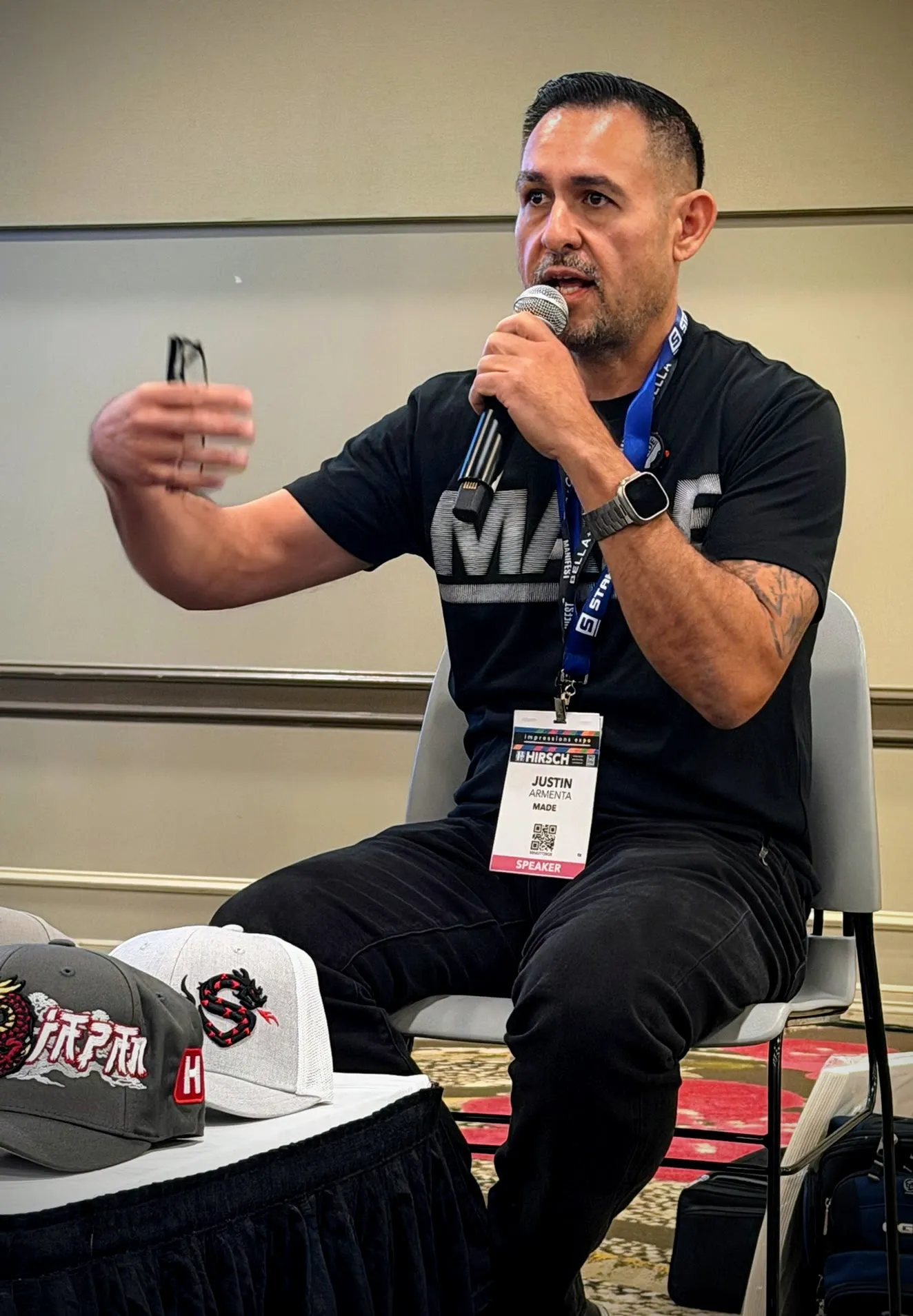
Is 3 mm enough or should I stack two layers
A single layer of high-density 3 mm embroidery foam is a useful starting point. Firmer foam may give a more pronounced shape and sharper edges without another layer.
Stacking adds bulk and the possibility of movement between layers. It can complicate coverage, penetration, and registration. Evaluate thicker specialty products or layered construction only when the file, garment, and machine setup support them.
“More foam will not rescue a design that lacks the width or coverage needed for puff.”
What should I check before running the order
Make the sample on the actual cap. Inspect the satin edges, foam coverage, registration, inside finish, and cleanup time. Check that the design fits the usable sewing area and that long stitches are not creating snag-prone loops.
Document the cap model, backing, foam, needle, file version, and settings. Judge both appearance and repeatability. A dramatic sample is valuable only if the shop can reproduce it efficiently.
“Test before you run.”
Continue learning at Impressions Expo Long Beach
Take your hat and puff questions into the next round of embroidery education. Join MADE at Impressions Expo Long Beach, January 21–23, 2027. Explore the conference options, see what the industry is producing, and register to keep developing your specialty skills.
Meet the Dallas Q&A speakers
Justin Armenta | Manager of Testing & Development, MADE Laboratory| justin@madelab.io & Owner, JA Digitizing Studios | designs@jadigitizing.com
Erich Campbell | Program Manager, Commercial Division, BriTon Leap / Embrilliance | embroideryerich@gmail.com
Joe Kramar | Embroidery Digitizer and Educator, Appliqué Joe | rocknjoe@gmail.com
Alex Burton | Trainer and Applications Specialist, Melco | aburton@melco.com