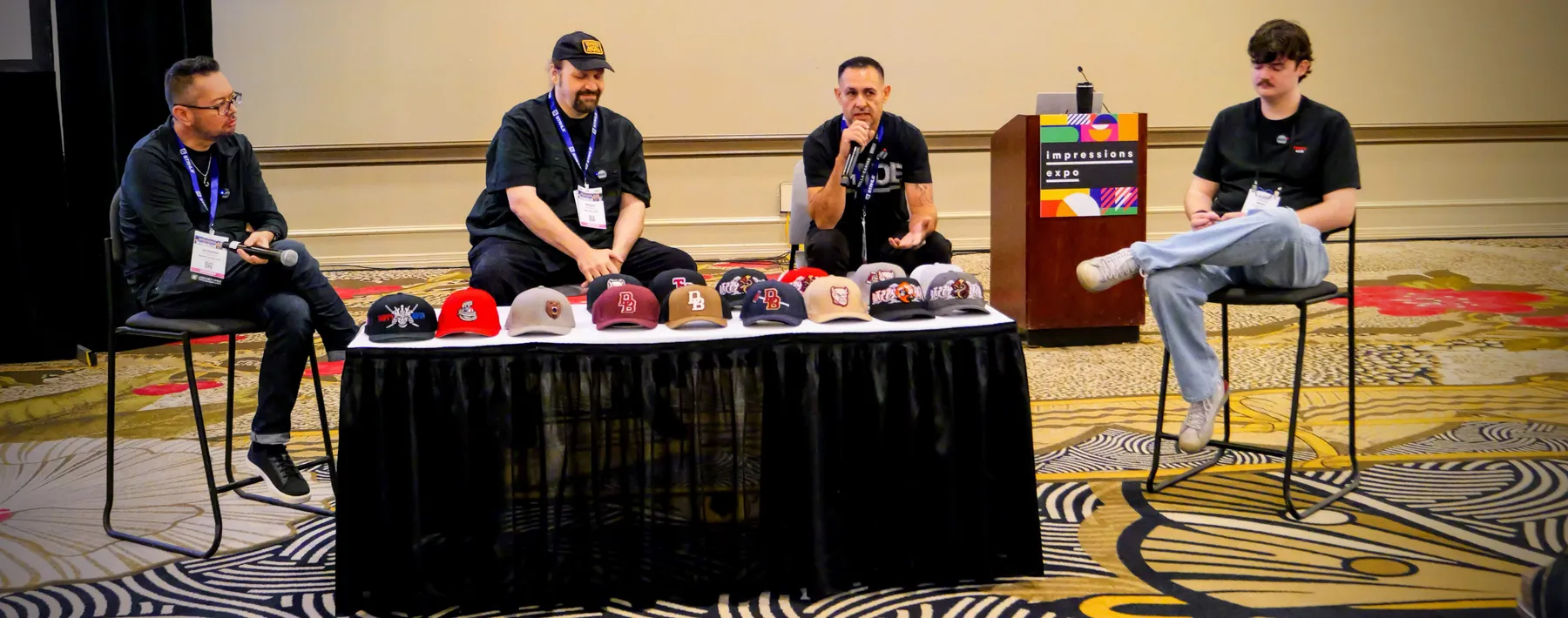
Starting an embroidery business means learning a craft and building an operation that can pay for it. That balance came up repeatedly during MADE’s live embroidery Q&A at Impressions Expo Dallas 2026. Attendees wanted to know what to buy, what to learn first, and when to grow.
This is Part 1 of MADE Lab’s seven-part Dallas Embroidery Q&A series. The answers combine the perspectives of Justin Armenta, Erich Campbell, Joe Kramar, and Alex Burton, with individual excerpts throughout. We’re continuing the questions we couldn’t finish in Dallas as we look ahead to Impressions Expo Long Beach.
Should I take the leap with no experience
Yes—with preparation. Get hands-on training, watch a working shop, and identify likely customers before committing to equipment payments. Learn how fabric, thread, needles, backing, and hooping interact, while also learning what it costs to complete an order.
Budget for supplies, software, practice garments, maintenance, and working capital. Your early samples will teach you things a demonstration cannot. Leave room to learn without needing every first order to carry the business.
How do I choose a niche
Look for customers whose needs you understand and can serve repeatedly. Local trades, public-safety departments, clubs, and organizations can offer recurring apparel work. Check their budgets and purchasing requirements rather than assuming the demand is guaranteed.
A creative specialty can also distinguish you: vintage appliqué, premium headwear, or distinctive textures. Local band merchandise may be rewarding, but the budgets can be tight. Choose a niche with a reason to buy from you beyond simply owning a machine.
“Be a consultant, not a commodity.” — Erich Campbell
Which machine should I buy first
Compare established commercial brands—including Tajima, Barudan, ZSK, Happy, SWF, and Melco—through the work you intend to sell. Ask for your designs to be sewn on your hats and garments. Watch loading, trimming, and problem recovery as well as stitching.
Ask who services your area, what training is included, how parts are obtained, and what the warranty excludes. Confirm the delivered price, hoops, cap equipment, installation, software, and space requirements. Accessible support can matter more than a headline speed specification.
Should I add single heads or a multihead
Independent single heads suit personalization, short runs, and different products running simultaneously. A multihead becomes attractive when repeat orders regularly keep several heads occupied. Compare complete output, including operator loading and finishing time.
Keep your single head if space and finances allow. Samples, rush work, and individual names can run there while the larger machine stays productive. It also gives you backup capacity.
Do I need digitizing software immediately
Plan for the capabilities you will use: inspecting files, assigning colors, adding names, and making informed edits. Full custom digitizing is a separate skill to develop, and outsourcing complex files can be sensible.
You can run a business with a contract digitizer, but understanding stitch construction will improve your communication and troubleshooting. Compare software levels, licensing, training, and updates before buying a bundle.
When should I expand into DTG or DTF
Build dependable, profitable embroidery first. Printing adds maintenance, materials, training, and another workflow. You can test demand by outsourcing printed products or evaluating a heat press with purchased transfers before buying a printer.
DTG prints directly onto garments; DTF uses a heat-applied printed transfer. The panel’s outlook on their future differed, but the purchase decision comes back to your customers, products, labor, and margins. Let actual orders justify the expansion.
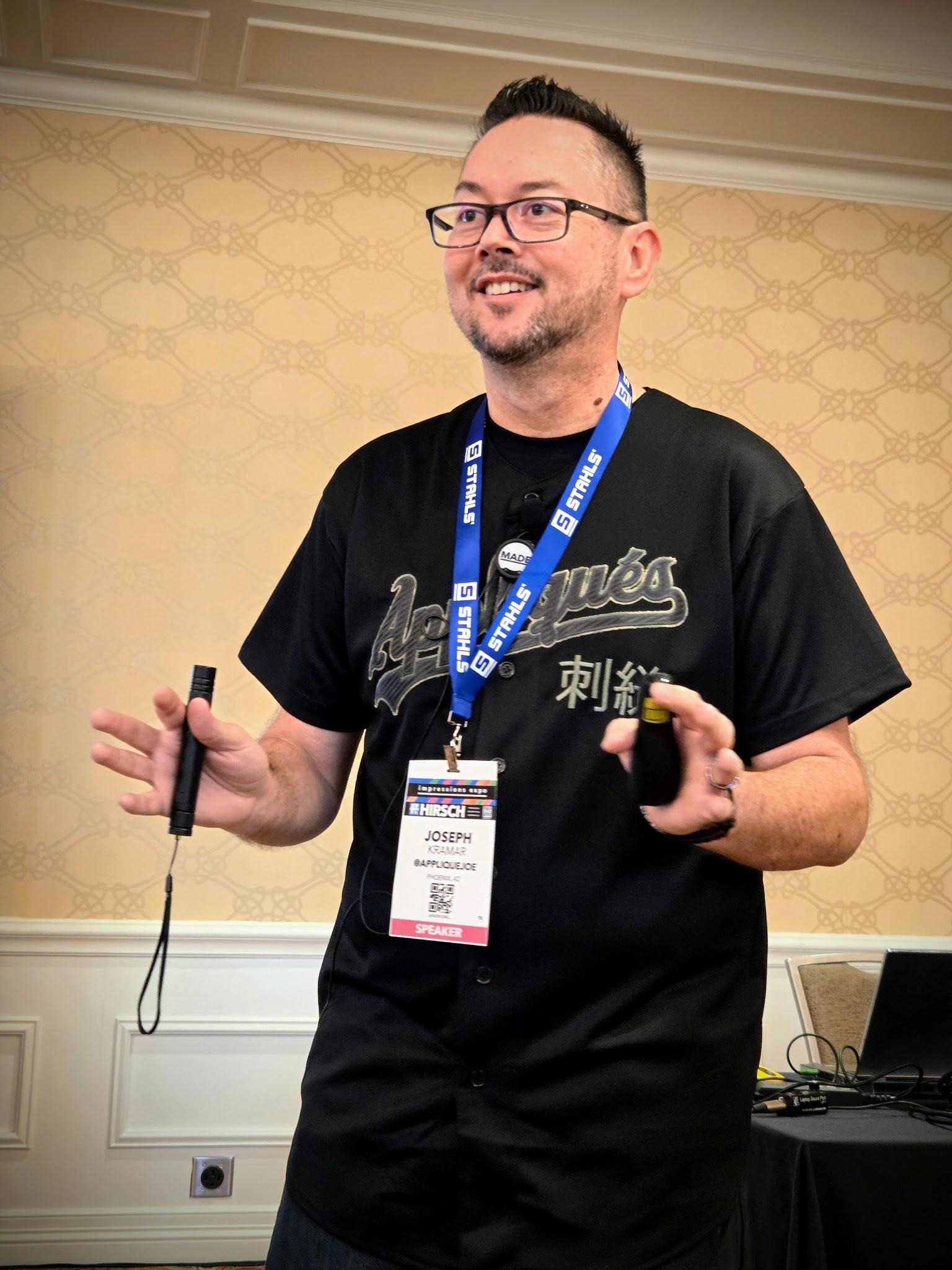
“Master one thing first.” — Joe Kramar
Continue learning at Impressions Expo Long Beach
Build your next step on practical education. Continue learning with MADE at Impressions Expo Long Beach, January 21–23, 2027, at the Long Beach Convention Center. Explore the conference education options and register to develop the skills behind a stronger embroidery business.
Meet the Dallas Q&A speakers
Justin Armenta | Manager of Testing & Development, MADE Laboratory| justin@madelab.io & Owner, JA Digitizing Studios | designs@jadigitizing.com
Erich Campbell | Program Manager, Commercial Division, BriTon Leap / Embrilliance | embroideryerich@gmail.com
Joe Kramar | Embroidery Digitizer and Educator, Appliqué Joe | rocknjoe@gmail.com
Alex Burton | Trainer and Applications Specialist, Melco | aburton@melco.com