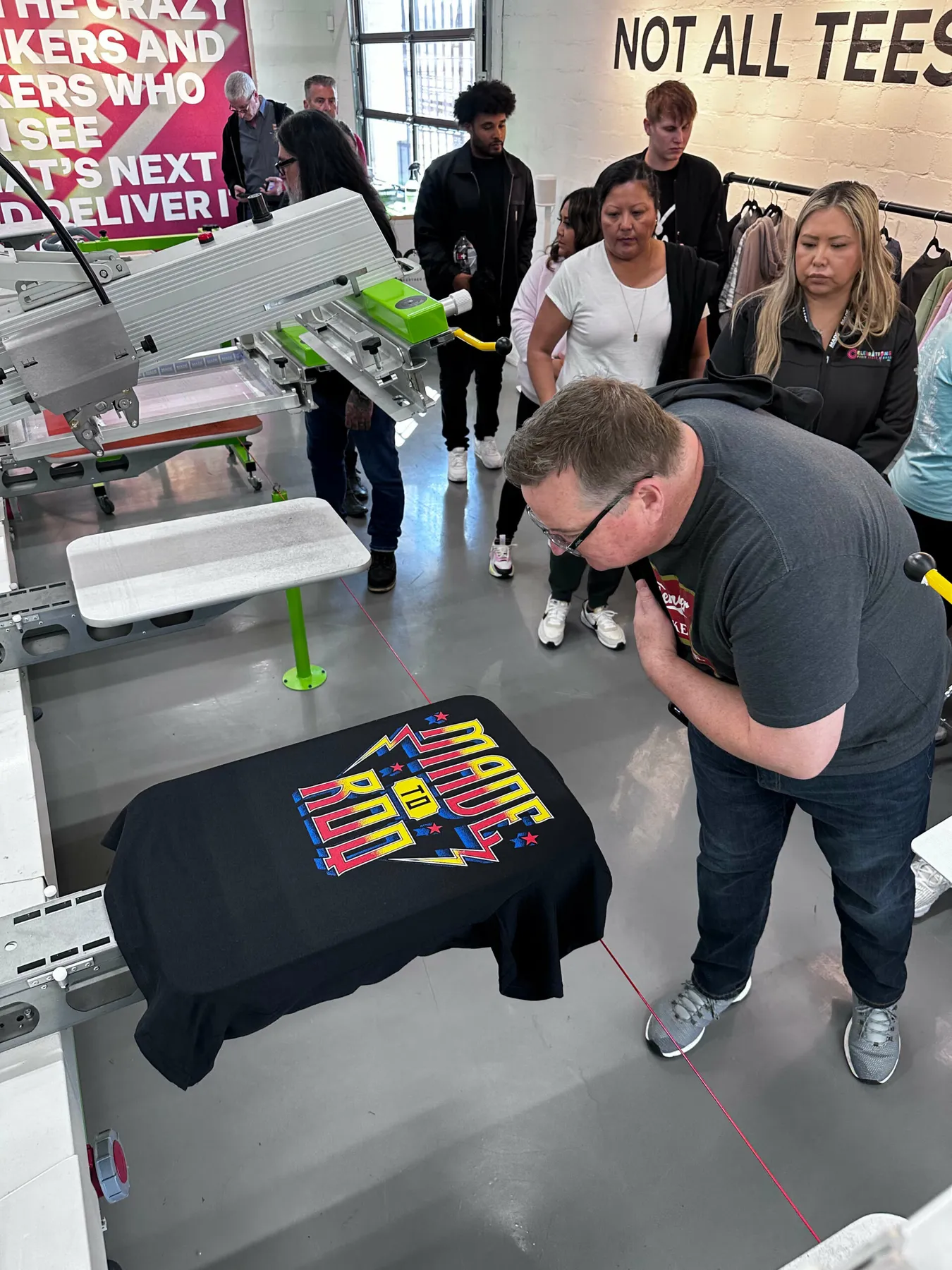
Wet-on-wet screen printing is a technique that requires precision, control, and an understanding of how inks interact with each other on press. At the MADE TO ROQ workshop, Miguel and the team showcased their expertise in wet-on-wet printing, demonstrating how to achieve clean, vibrant prints without excessive buildup or blurring.
Here are five key takeaways to perfect your wet-on-wet screen printing process:
1. Control Your Ink Deposition
One of the most crucial aspects of wet-on-wet printing is laying down the right amount of ink. Since each color prints directly onto the previous one without flashing, too much ink can lead to smudging and loss of detail.
Pro Tips:
- Use higher mesh screens (230+) to help reduce ink deposit.
- Apply a faster squeegee stroke with a lower angle (around 15°) to keep the print crisp.
- Reduce pressure to avoid excessive ink transfer while maintaining solid coverage.
By keeping the ink deposit light, you maintain sharp details and avoid unwanted mixing between layers.
2. Use an Optimized Underbase for Depth & Smoothness
For this project, a gradient underbase was used to create depth in the design while allowing the colors to interact smoothly.
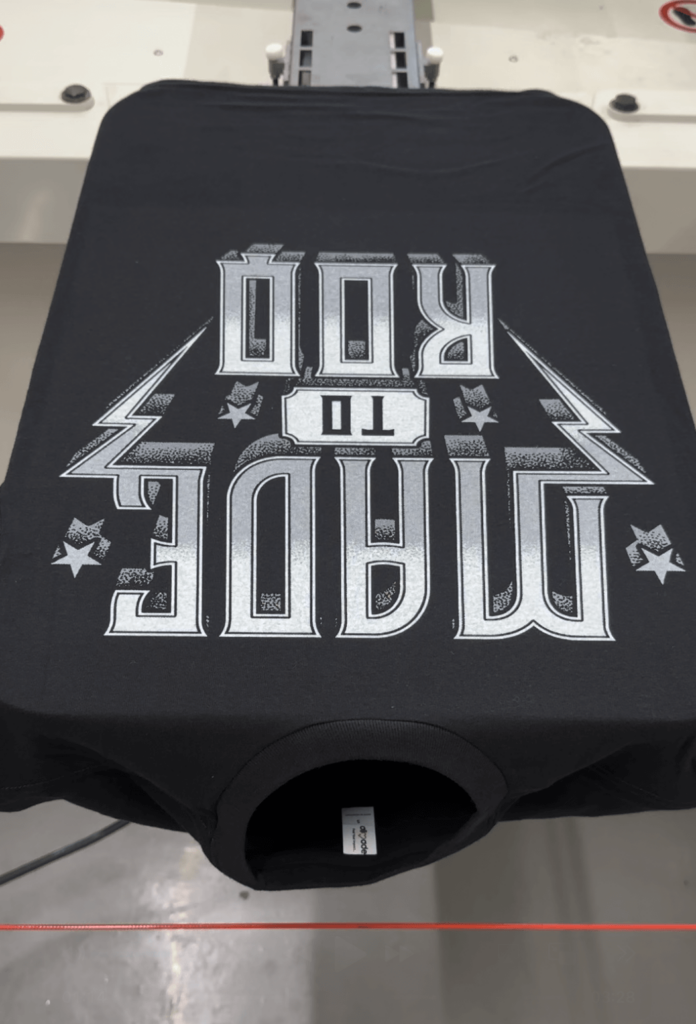
Gradient Underbase
Pro Tips:
- Use a higher mesh count (230+) for the underbase to keep it lightweight.
- Apply two strokes to ensure a smooth, even layer.
- Utilize a Stampinator or smoothing tool to flatten the underbase, eliminating texture that could interfere with the top colors.
This method ensures that the subsequent layers retain their sharpness and vibrancy without excessive ink buildup.
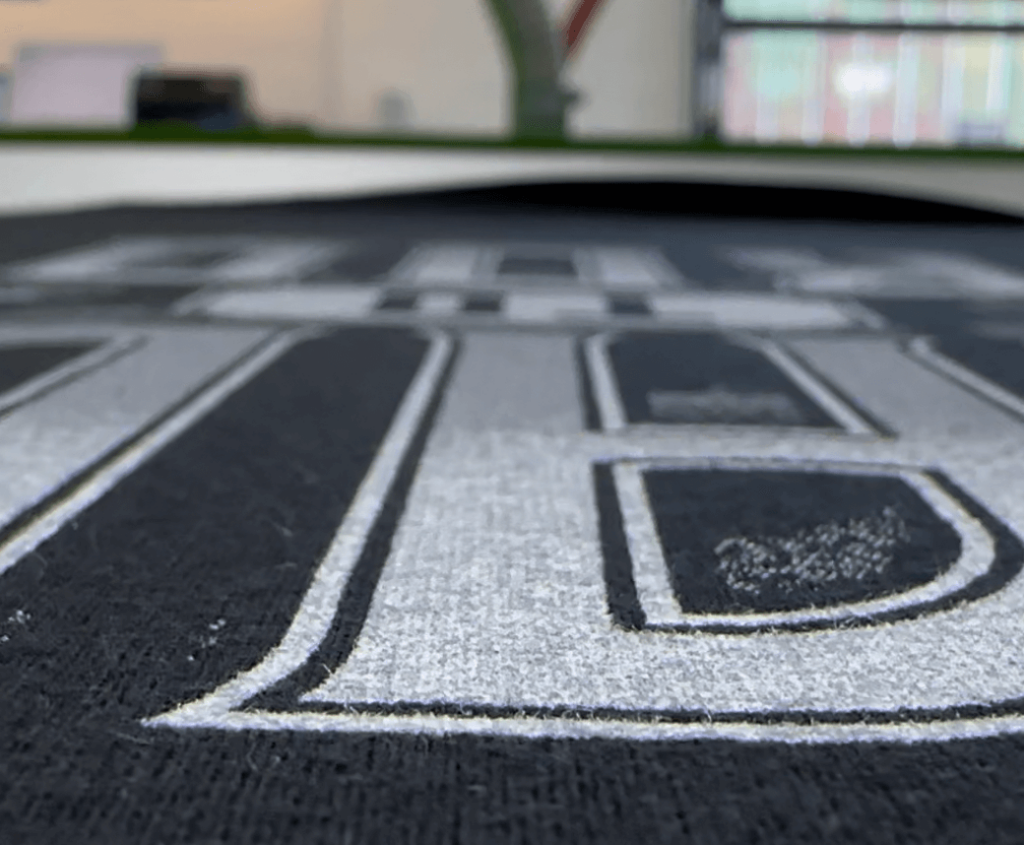
Pre Flash – No Stamp
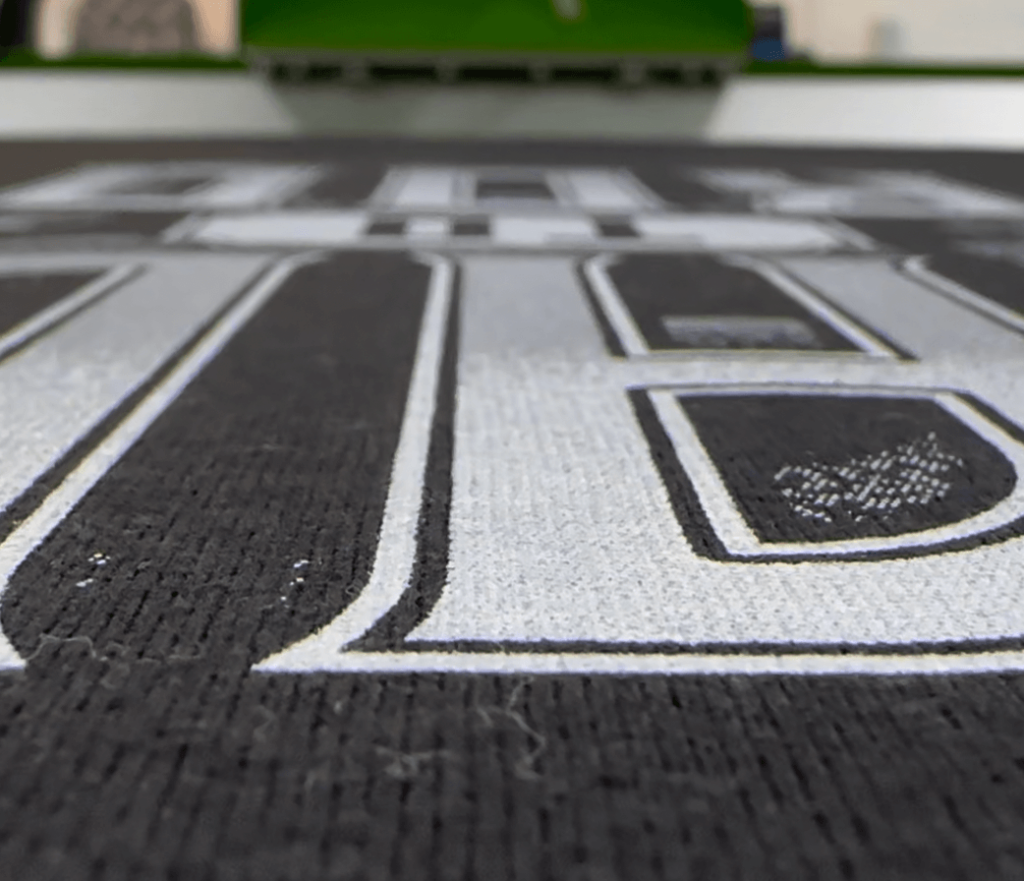
Post Stamp Flash w/ Stampinator
3. Maintain Warm Pallets for Optimal Ink Performance
Keeping your pallets warm is essential for consistent wet-on-wet printing. When the pallets maintain heat, the ink gels faster, reducing tackiness and helping to keep each layer crisp.
Pro Tips:
- If starting with cold pallets, let them go through a couple of cycles before beginning production.
- The honeycomb structure of lightweight aluminum pallets helps with heat retention while cooling down quickly when needed.
- For short runs, manually pre-warm the pallets to maintain consistency.
Warm pallets improve ink flow, prevent excessive sticking, and contribute to a smoother wet-on-wet process.
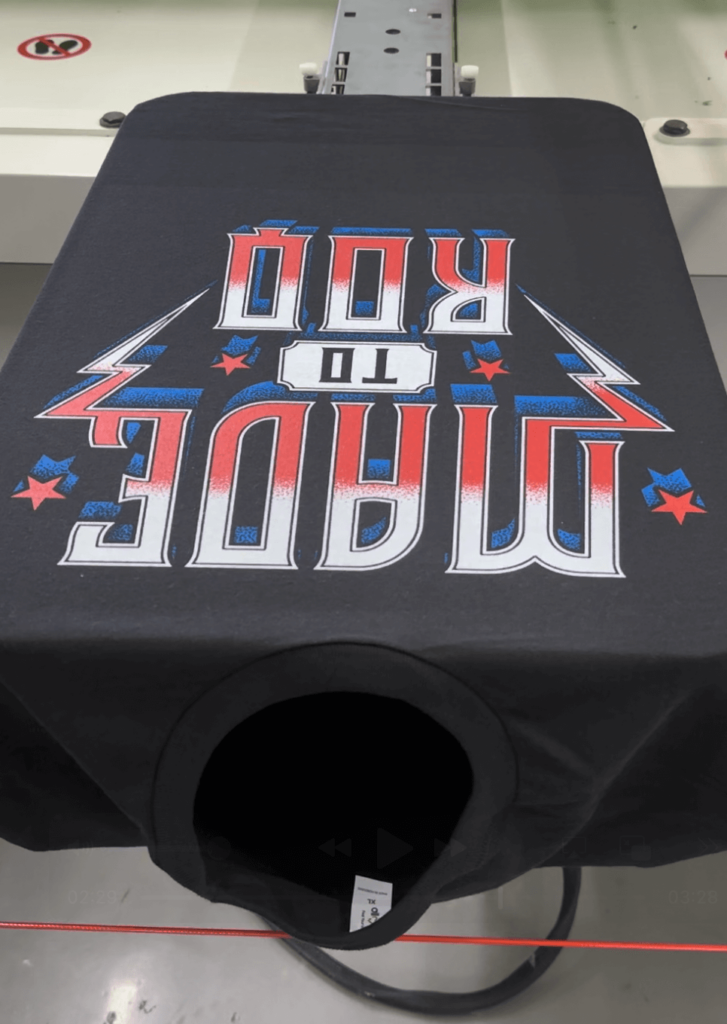
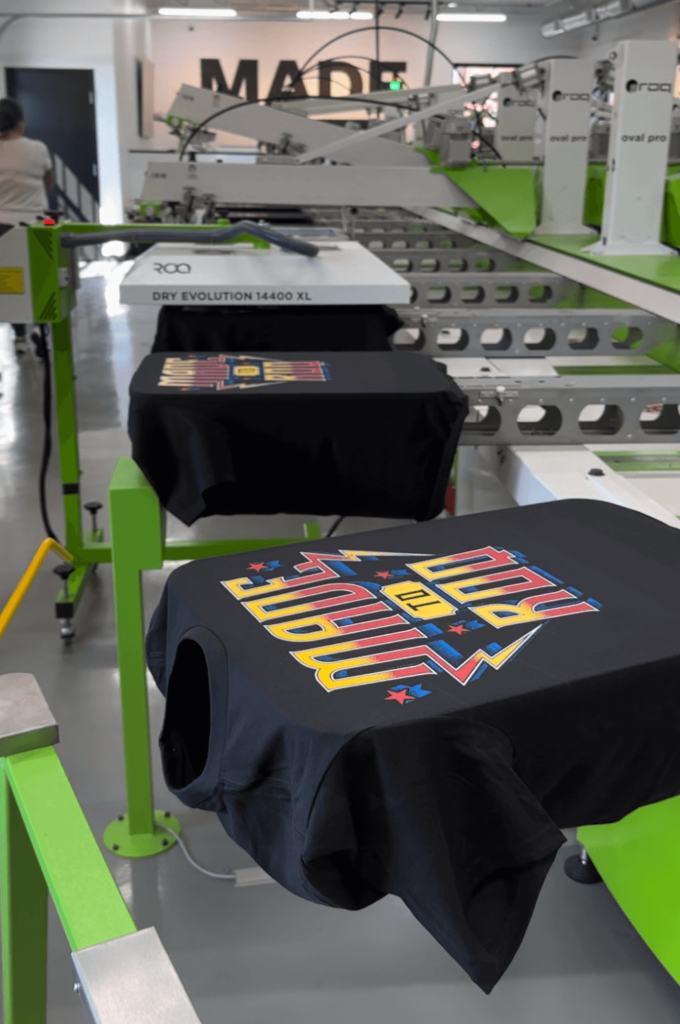
Red and Blue, Wet on Wet
4. Adjust Print Order to Minimize Tackiness
Certain colors, like yellow, tend to be tackier than others, making them more prone to sticking and pulling as additional layers are printed. The print sequence can make a big difference in how colors interact.
Pro Tips:
- If a color is particularly tacky, print it last to prevent other inks from sticking to it.
- Keep your off-contact at around 0.5mm to allow the screen to snap off the ink cleanly.
- Faster strokes help minimize ink buildup and reduce the risk of smearing.
Thinking through ink sequence and material behavior ensures a smooth, high-quality final print.
All Wet on Wet Colors Before Highlight White
5. Understand the Natural Stickiness of Wet-on-Wet Printing
Even with proper technique, a slight tack or pop sound when lifting the screen is normal in wet-on-wet printing. However, if colors start blending too much or shifting, it’s a sign that adjustments are needed.
Pro Tips:
- Some inks are naturally tackier—adjust stroke speed and pressure accordingly.
- Use additives (if necessary) to reduce ink tack while maintaining opacity.
- A quick, sharp release of the screen helps prevent excess ink transfer.
Mastering wet-on-wet printing means understanding and controlling these variables rather than fighting against them.
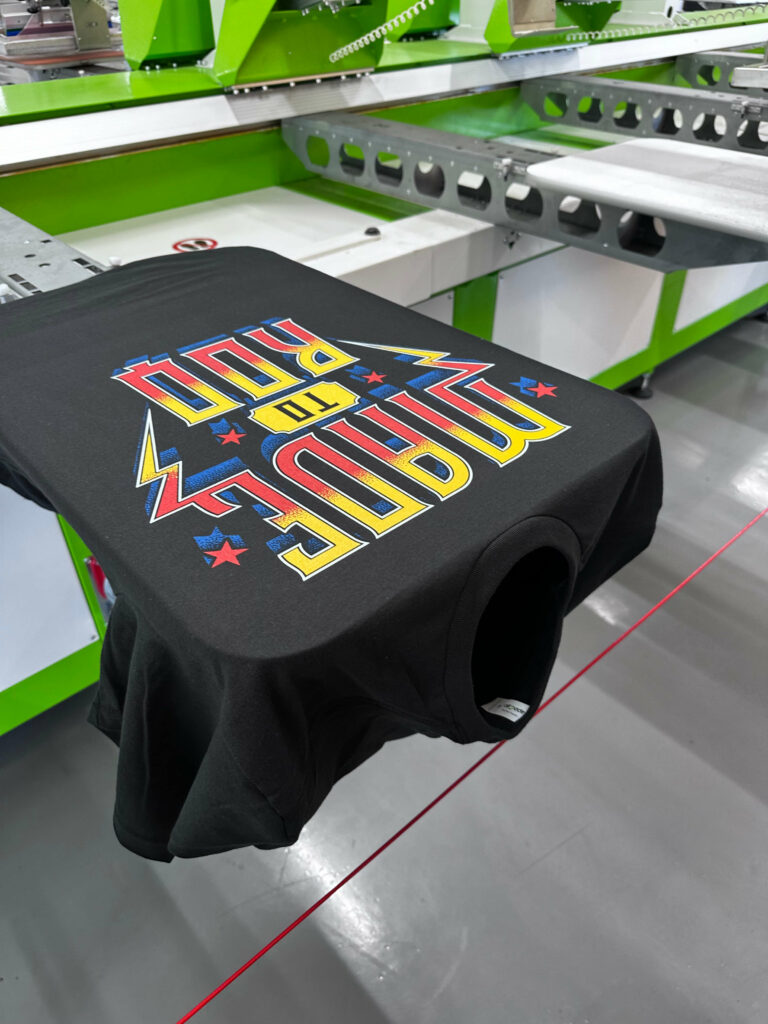
Final Result
Final Thoughts
The MADE TO ROQ Concert Print was a perfect showcase of expert wet-on-wet printing in action. By carefully balancing ink deposition, screen setup, print sequence, and temperature control, the team achieved a clean, vintage-style print without unnecessary flashing.
If you’re looking to optimize and perfect your automatic screen printing operation, start with these five key techniques and stay tuned for more tip, tricks, and education from MADE Lab. Upcoming MADE TO ROQ Workshops and other events.