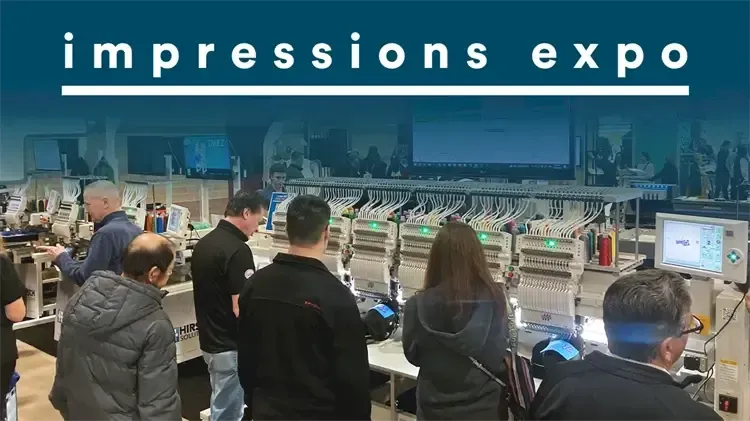
At MADE Laboratory, we believe the best industry education comes from people who have actually done the work—people who understand the realities of production, have solved problems at the machine, and are willing to share what they’ve learned.
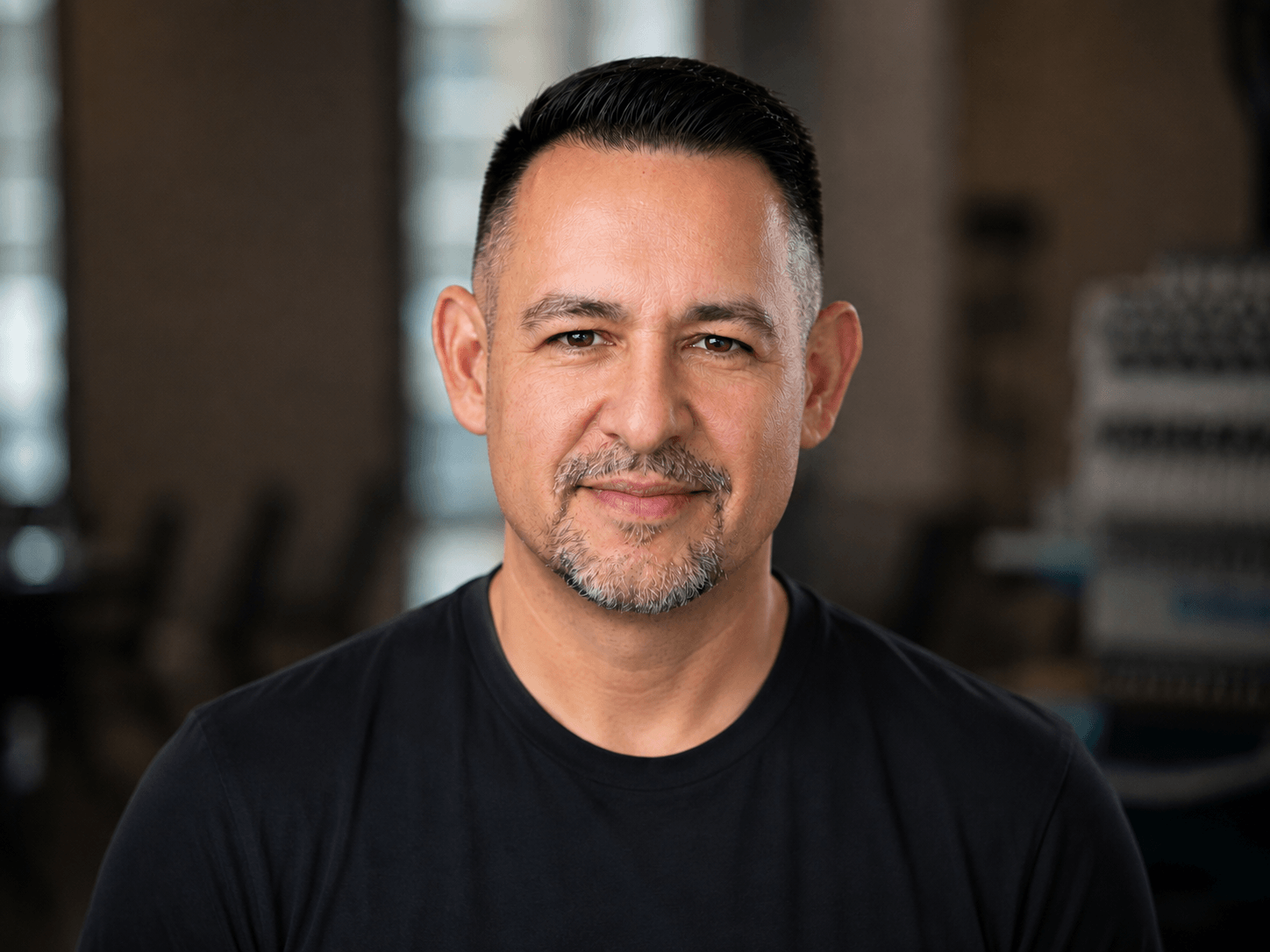
That’s why we’re excited to welcome Justin Armenta of JA Digitizing Studios and partner in The Embroidery Nerd Group to the MADE Laboratory team as we continue building a stronger embroidery education experience for the decorated apparel community.
Justin brings over 33 years of hands-on embroidery and digitizing experience, along with something equally important: a passion for helping decorators understand why embroidery works the way it does—not simply which buttons to push.
And you’ll see that philosophy in action at Impressions Expo Dallas.
A New Approach to Embroidery Education in Dallas
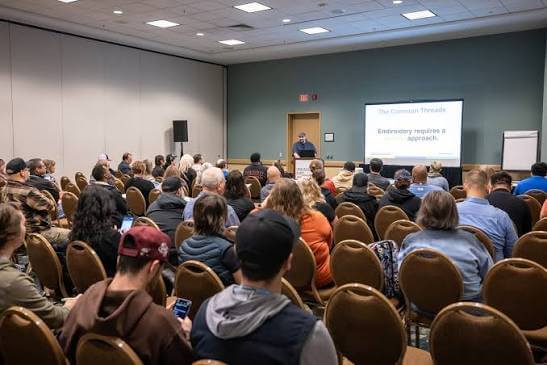
MADE Laboratory is helping reshape the education experience at Impressions Dallas around a simple idea: education should create a path.
Rather than treating every class as an isolated session, the Dallas program begins with foundational 101 education before progressing into more intermediate and advanced Camp sessions.
For embroidery decorators, that means an opportunity to build knowledge progressively—from understanding embroidery essentials and digitizing fundamentals to exploring production, troubleshooting, advanced digitizing, appliqué, specialty techniques, and more.
As Justin explained during a recent Needle Bar Live conversation with embroidery educator Erich Campbell, the goal is to create more of a community environment instead of separating decorators into isolated classrooms and disciplines.
That distinction matters.
You Don't Have to Be a Digitizer to Understand Digitizing
One of the strongest messages from Justin and Erich's conversation was directed at embroiderers who outsource their digitizing.
You don't necessarily need to become a professional digitizer.
But understanding digitizing can make you a much better embroiderer.
Knowing concepts such as underlay, density, compensation, sequencing, stitch angles, and pathing gives decorators a vocabulary for diagnosing problems and communicating with their digitizing partners.
Instead of telling a digitizer, "This file doesn't work," an educated embroiderer can explain what is actually happening.
That can mean fewer revisions, faster communication, better sew-outs, and ultimately a more efficient shop.
The same knowledge can also help decorators make small production adjustments themselves instead of stopping production and waiting for someone else to make every minor change.
That's exactly the kind of practical knowledge MADE wants education to deliver.
Learn the Fundamentals, Not Just the Software
Erich's Digitizing 101 session illustrates another important part of the education philosophy coming to Dallas.
The objective isn't to teach one specific software package.
It's to teach embroidery.
Whether a decorator works in Wilcom, Embrilliance StitchArtist, Pulse, Melco DesignShop, or another platform, the fundamental principles behind creating good embroidery remain relevant.
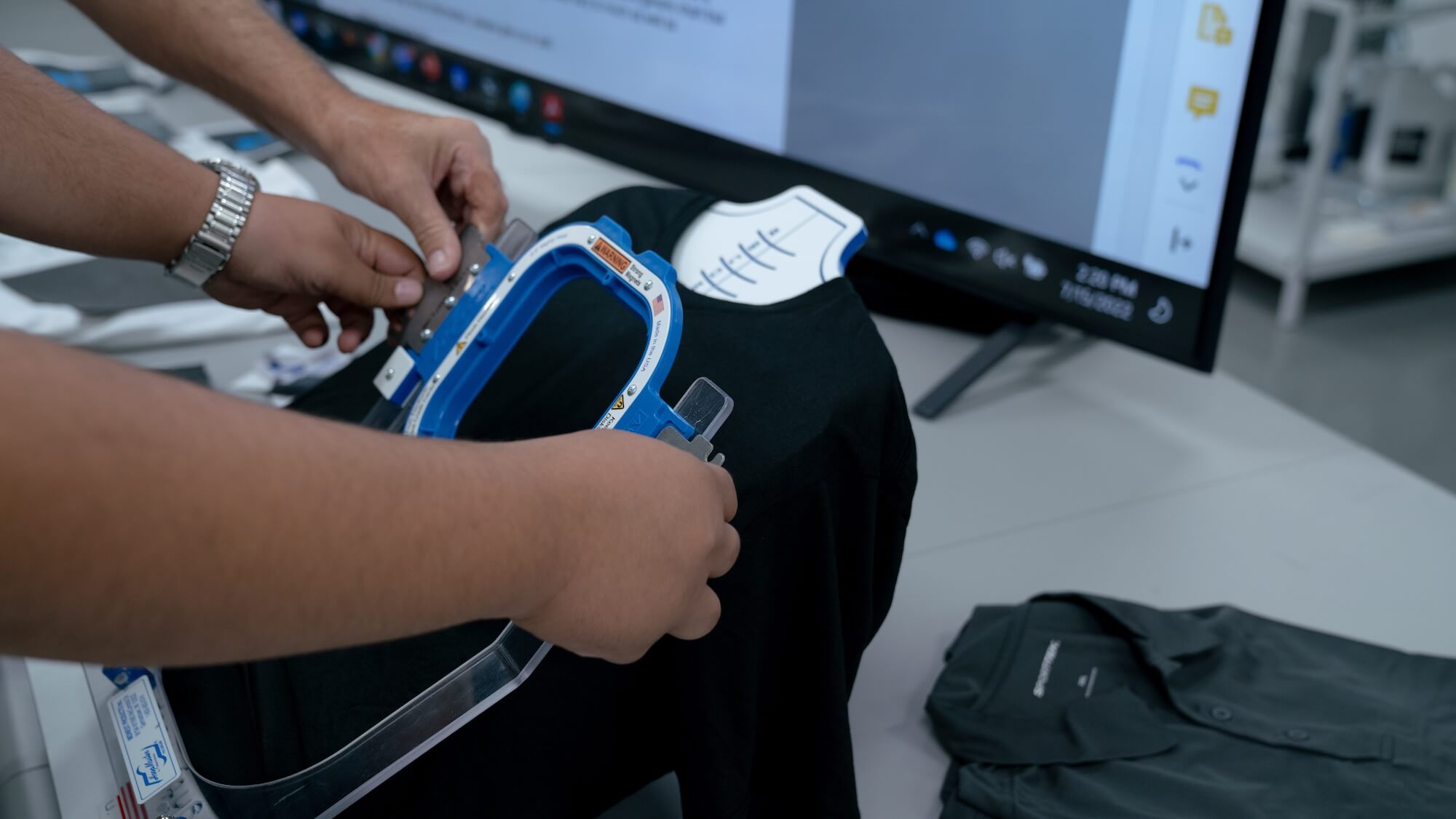
Understanding how stitches interact with materials, why distortion happens, how underlay supports a design, and how different stitch types behave gives decorators knowledge they can take back to whatever software and equipment they use.
Software changes.
The principles behind great embroidery travel with you.
Education Beyond the Embroidery Machine
There is another important shift happening at Impressions Dallas: breaking down the walls between decoration disciplines.
If you're an embroiderer, your customers probably don't only ask for embroidery.
Eventually, they're going to ask about screen printing, DTF, heat-applied graphics, sublimation, engraving, patches, or another decoration method.
You don't necessarily have to bring every process in-house. But understanding those processes makes you better equipped to recommend solutions, work with production partners, and serve your customers.
That's why the broader education experience includes embroidery alongside printing, heat transfer, marketing, business, operations, automation, laser and other topics.
As Justin encouraged viewers during the conversation: if you're an embroiderer and there's an opportunity to sit in on a screen-printing session, take it.
Soak it all in.
Your next opportunity might come from a process you aren't currently using.
The Barrier to Entry Has Changed. Knowledge Matters More Than Ever.
Embroidery equipment and software have become increasingly accessible.
That's good for the industry—but it also changes what separates one decorator from another.
Owning a machine isn't enough.
The advantage increasingly comes from knowing how and why to use it.
It's understanding why a design isn't running efficiently. It's knowing how artwork needs to change before translating it into thread. It's recognizing when embroidery is the right decoration process—and when it isn't.
And it's having the confidence to have that conversation with a customer before a problem ever reaches production.
That's where education becomes a competitive advantage.
Meet the People Behind the Knowledge
The embroidery education experience in Dallas brings together educators with different backgrounds, specialties, and perspectives.
That includes educators such as Erich Campbell, whose commercial digitizing career spans thousands of production files and years of teaching; Joe Kramer, bringing deep knowledge of appliqué, specialty materials and production techniques; and other industry educators contributing to the embroidery curriculum.
Justin's role with MADE Laboratory helps connect those educators, their knowledge, and the decorators who want to learn from them.
The objective isn't for everyone to leave Dallas doing embroidery exactly the same way.
It's to give decorators a bigger toolbox.
Come Curious. Leave Better.
Whether you're operating a single-head machine from home, building your first commercial shop, running multi-head production, or expanding into entirely new decoration methods, there's something to learn.
And that's ultimately what MADE Laboratory wants to build.
Not simply another schedule of classes.
A place where decorators, educators, manufacturers, suppliers, artists, and business owners can exchange knowledge—and where one conversation can lead to the next idea that changes your business.
We're excited to have Justin Armenta joining the MADE Laboratory team and helping us build that experience.
We'll see you in Dallas.