Understanding Why Embroidery Works
Great embroidery isn’t just about knowing which buttons to push in your software.
It’s about understanding why stitches behave the way they do.
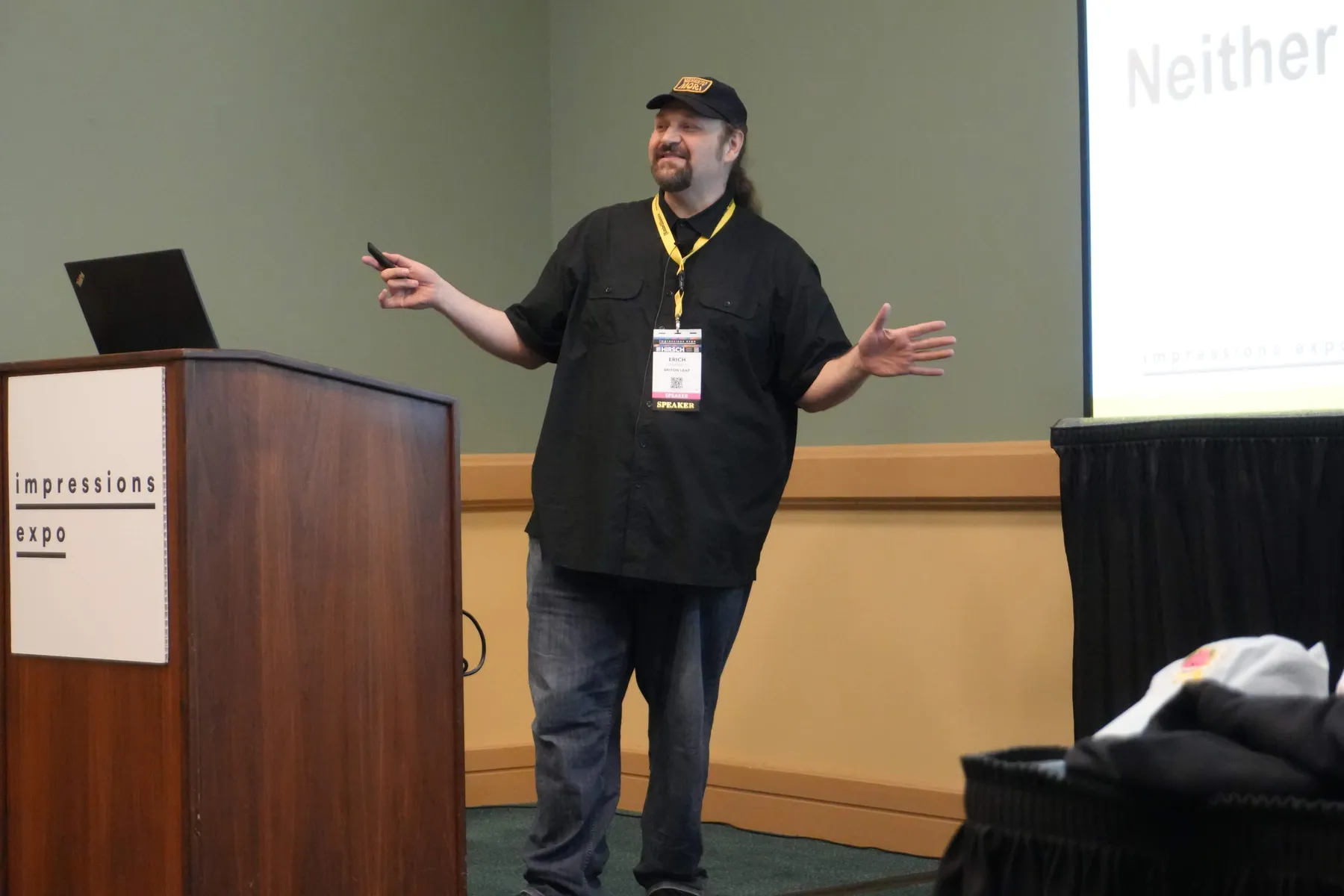
That idea came through clearly when embroidery educator and digitizer Erich Campbell joined The Embroidery Nerd on a recent episode of The Needle Bar Live to talk about education, digitizing, and what decorators can expect at Impressions Expo Dallas 2026.
Erich has been digitizing for commercial embroidery production since 2000 and has spent years educating decorators on everything from digitizing and production to pricing and business. At Dallas, he’ll bring that experience into two classes designed to help embroiderers understand what happens before the machine ever starts running.
You Don’t Have to Be a Digitizer
One of the important ideas discussed on The Needle Bar was that learning digitizing doesn’t necessarily mean you have to become a digitizer.
If you run embroidery equipment, understanding how embroidery files are constructed makes you better equipped to recognize problems, communicate with digitizers, and make production decisions.
Density, underlay, compensation, stitch types and sequencing aren't just concerns for the person creating the file.
They directly affect what happens at the machine.
That’s the foundation behind Erich’s Digitizing 101 class at Impressions Dallas. The session explores how artwork becomes stitches, where automation and auto-digitizing have limitations, how distortion affects embroidery, and how digitizers make decisions when interpreting artwork.
Learning to See Embroidery Differently
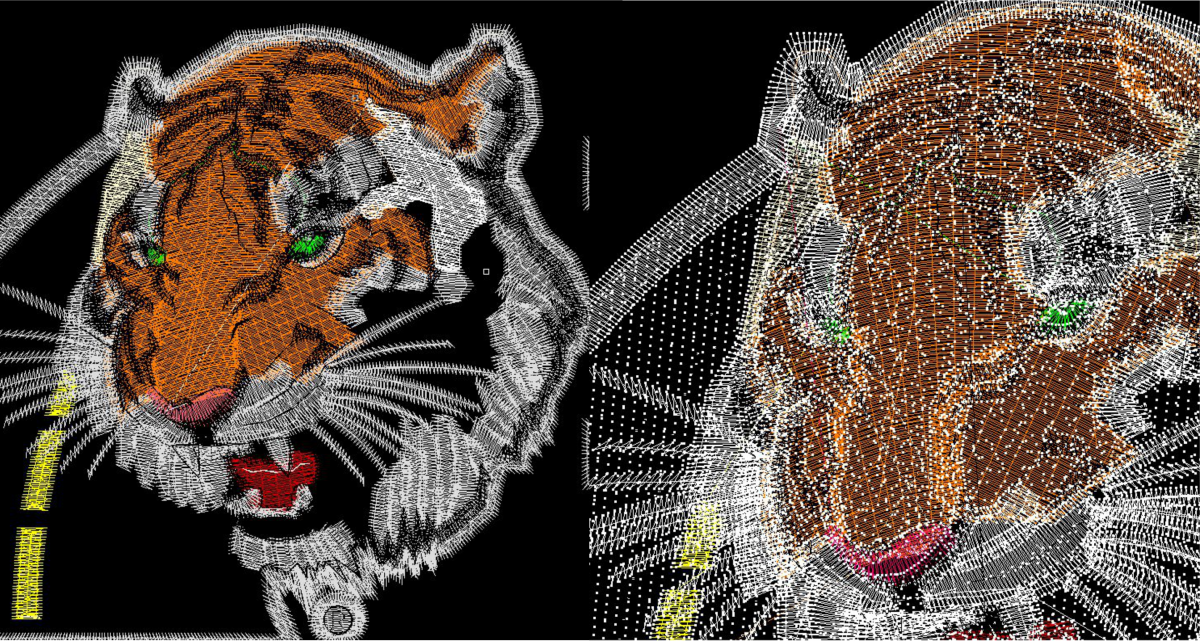
Digitizing is more than tracing artwork and assigning stitch types. You have to learn to see artwork through the physical realities of embroidery.
Fabric moves. Stitches pull. Thread has dimension. Small lettering has limitations. Different stitch structures interact with each other.
Developing what Erich calls an “eye for embroidery” means learning to anticipate those forces before they become production problems. And once you understand the fundamentals, you can start using them strategically.
From Good Digitizing to Better Production
That progression continues in Erich’s Stitch Camp – Advanced Digitizing session.
Here, the conversation moves beyond simply creating a file and into engineering embroidery for production.
How can you reduce stitch counts without sacrificing coverage?
How do you prevent excessive density and fabric distortion?
How can you produce clean lettering at extremely small sizes?
And how can sequencing colors, trims and design elements reduce downtime on a multi-head production floor?
These aren't simply digitizing questions. They're production questions.
Every Stitch Has a Cost
A few unnecessary stitches may not seem important on one garment.
Multiply them across hundreds or thousands of pieces and suddenly those stitches represent machine time, thread, labor and production capacity.
That's why advanced digitizing isn't only about making embroidery look better.
It's about making embroidery run better.
Thoughtful density, efficient pathing, intelligent sequencing and fewer unnecessary trims can transform a design from something that merely looks good into something built for commercial production. Erich’s Advanced Digitizing class specifically focuses on reducing stitch counts, improving design clarity and creating production-friendly sequencing for multi-head environments.
Come Learn With Us in Dallas
That combination of understanding the fundamentals and then learning how to apply them is exactly what we want the MADE Laboratory education experience at Impressions Dallas to deliver.
Erich Campbell’s Digitizing 101 takes place Wednesday, October 21, followed by Stitch Camp – Advanced Digitizing on Thursday, October 22.
Whether you digitize every day, outsource your files, or simply want your embroidery department to run more efficiently, understanding what goes into the stitches gives you more control over what comes off the machine.
Because better embroidery starts long before you press Start.