If you’ve ever felt like you’re working all day but not really getting ahead, you’re not alone.
A lot of shops fall into the same pattern:
Create art → burn screens → wash screens → dry screens → tape screens → set up → print → tear down… and then do it all over again for the next job.
On paper, that makes sense. Every job goes through the full process start to finish.
But in reality? You end up walking in circles.
You’re bouncing between departments, switching tasks constantly, and adding a ton of unnecessary movement and setup time. The work gets done, but it’s not efficient—and it definitely doesn’t scale.
The Problem with One-Job-at-a-Time Thinking
Every step in screen printing is necessary. There’s no skipping burning, developing, or setup.
But the issue isn’t what you’re doing—it’s how you’re approaching it.
When you run jobs one at a time through the entire pipeline, you’re forcing yourself to:
- Re-set your workspace over and over
- Switch mental focus constantly
- Walk back and forth between areas
- Repeat the same prep steps multiple times a day
That’s where time gets lost.
The Shift: Start Thinking in Batches
Instead of pushing one job all the way through, start grouping your work by process.
That means:
- Burn all screens for all upcoming jobs
- Develop all screens at once
- Dry and tape everything in one run
- Stage jobs so they’re fully prepped before hitting the press
Now you’re not switching tasks—you’re owning a task.
And that’s where efficiency starts to show up.
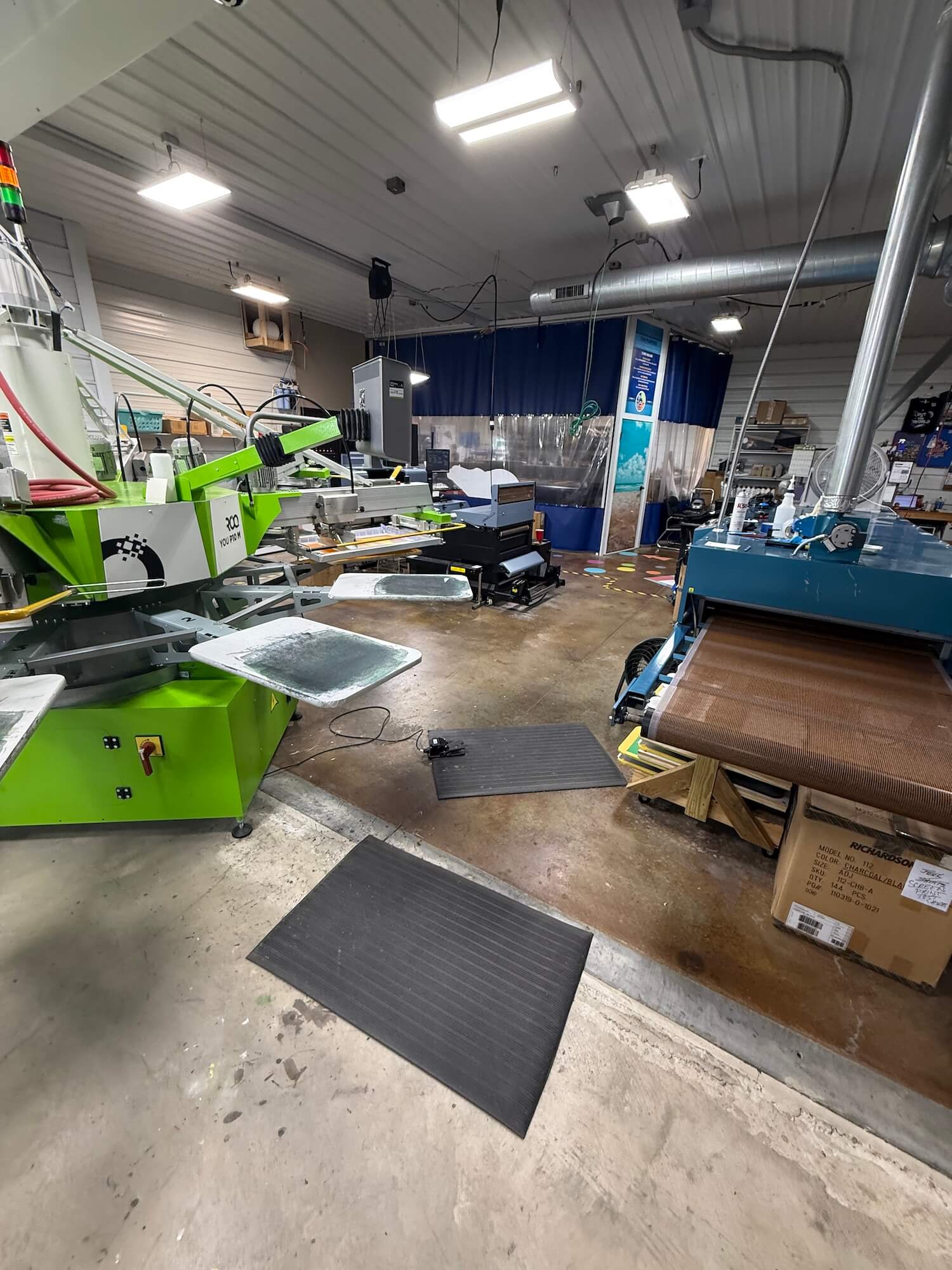
Why Batching Works
When you batch work, a few things happen immediately:
1. You reduce movement You’re not running back and forth between steps—you’re staying in one zone and knocking it out.
2. You build momentum Doing the same task repeatedly makes you faster and more consistent.
3. You increase throughput Instead of finishing one job at a time, you’re moving multiple jobs forward simultaneously.
4. You expose inefficiencies When you repeat a step in bulk, it becomes obvious where time is being wasted—and where you can improve.
This is the same mindset behind solid workflow systems and SOP-driven shops. It’s not just about working harder—it’s about structuring the work so it flows.
Take It a Step Further: Batch on Press
Batching doesn’t stop in the screen room.
Once jobs are prepped, you can refine even further by grouping:
- Jobs with similar ink colors
- Jobs with similar garment types
- Jobs with similar setups
This reduces changeovers, ink swaps, and setup adjustments—some of the biggest time killers on press.
The Bigger Picture
At the end of the day, batching doesn’t change how much work you have.
It changes how long it takes to get through it.
You’re still burning screens.
Still printing shirts.
Still doing all the same steps.
But you’re doing them in a way that eliminates wasted motion, reduces downtime, and creates space to grow.
And that’s really the goal.
Because more time saved = more capacity.
And more capacity = more opportunity.